
STUDENT-CENTERED EXPERIENCES

Goal
 
Ensure every Michigan FFA member has equitable access to meaningful, student-centered FFA experiences, grounded in the full three-circle model of AFNR education.

Objective 1.1
 
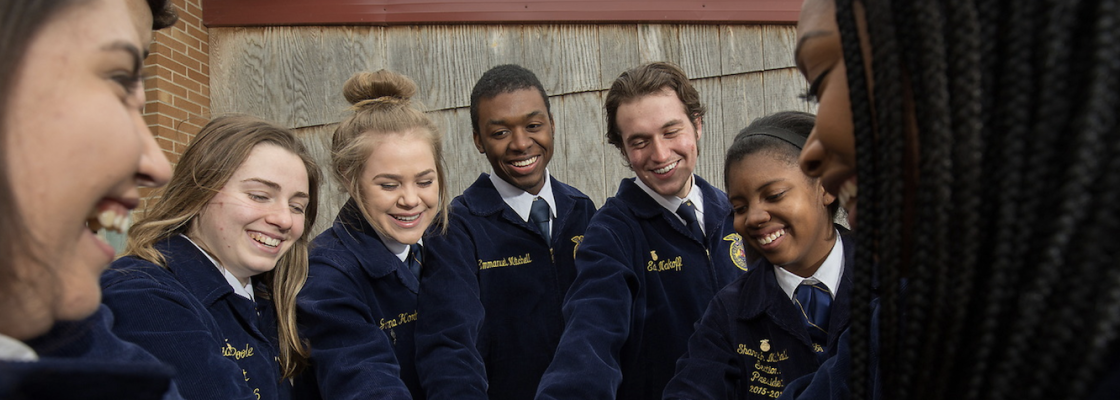
Every Michigan FFA member experiences a strong sense of belonging, connection, and positive engagement within their chapter and across the state.
Initiatives
Progress
Design events that foster connection and relationship-building while ensuring a culture of safety and support.
See Something Say Something reporting system at all state-level events
AET waivers and code of conduct required for all teachers and students
Background checks implemented for high-access volunteers
Zero Tolerance Policy adopted by Board of Directors
Increase representation and inclusivity in branding and visuals.
 
Expand age- and experience-appropriate opportunities for junior high members.
Exploration of new junior high leadership development event
Prioritize student voices when evaluating engagement, inclusivity, and accessibility across events and participation opportunities.
 
Increase support for the Michigan FFA Belonging & Engagement Committee.
Support allocated for training and development of resources
Train regional officers, state officers, staff, board members, and committees on belonging-focused practices and offer resources to support implementation at the chapter level.
 
Objective 1.2
 
Michigan FFA provides high-quality, meaningful programming that evolves through intentional evaluation and reflects diverse student interests and AFNR pathways.
Initiatives
Progress
Grow local agriscience programs and FFA membership to expand student access and engagement, with intentional support for new and developing programs.
Official dress grants open to new programs for sets of chapter jackets
Reduced dues structure for first- and second-year programs
Evaluate all contests, recognition programs, and events using clear quality indicators to ensure meaningful student recognition and engaging experiences.
Added SAE Awards, National Chapter Awards, State Star Awards, and Gold and Silver State Degrees to the evaluation rotation
Ensure balance and equity across recognition and competitive opportunities for students in both two- and four-year programs.
 
Align programming with student and industry needs and emerging AFNR pathways.
Introduced two new state-level food science SAE Award areas
Expanded the state-level definition of SAE to include all areas of AFNR, with opportunities for students to be recognized in existing SAE Award areas even when they are not eligible under National FFA guidelines
Guide state-level programs with the Program of Activities to maintain a comprehensive, balanced portfolio.
 
Objective 1.3
 
All Michigan FFA members have equitable access to leadership development, career exploration, and transformative learning experiences.
Initiatives
Progress
Offer student travel grants and participation scholarships.
Provided full scholarships for students to attend the Fall Leadership and Careers Conference
Expand official dress support beyond jackets.
Provided scholarships to support students in obtaining complete Official Dress
Implement strategies to support chapters with longer travel distances, including those in the Upper Peninsula.
Prioritized scholarships for students traveling longer distances to increase access to statewide events
Encourage student exploration of all AFNR pathways and engagement with industry partners by strengthening AET record-keeping resources and expanding training and opportunities for industry connection.
 
Expand leadership development opportunities at multiple levels, with targeted support for regional officers and strengthened investment in the state officer experience, including training and incentives.
Developed Regional Checkpoints to enhance training and preparation for regional officers
Expanded the state officer experience by ensuring full-team participation in the National FFA Summit, strengthening engagement in the delegate process and national advocacy
Information Icon
Progress updates highlight new or expanded initiatives aligned with the Strategic Plan. Many ongoing programs, services, and long-standing practices continue to support these priorities but are not individually reflected here.